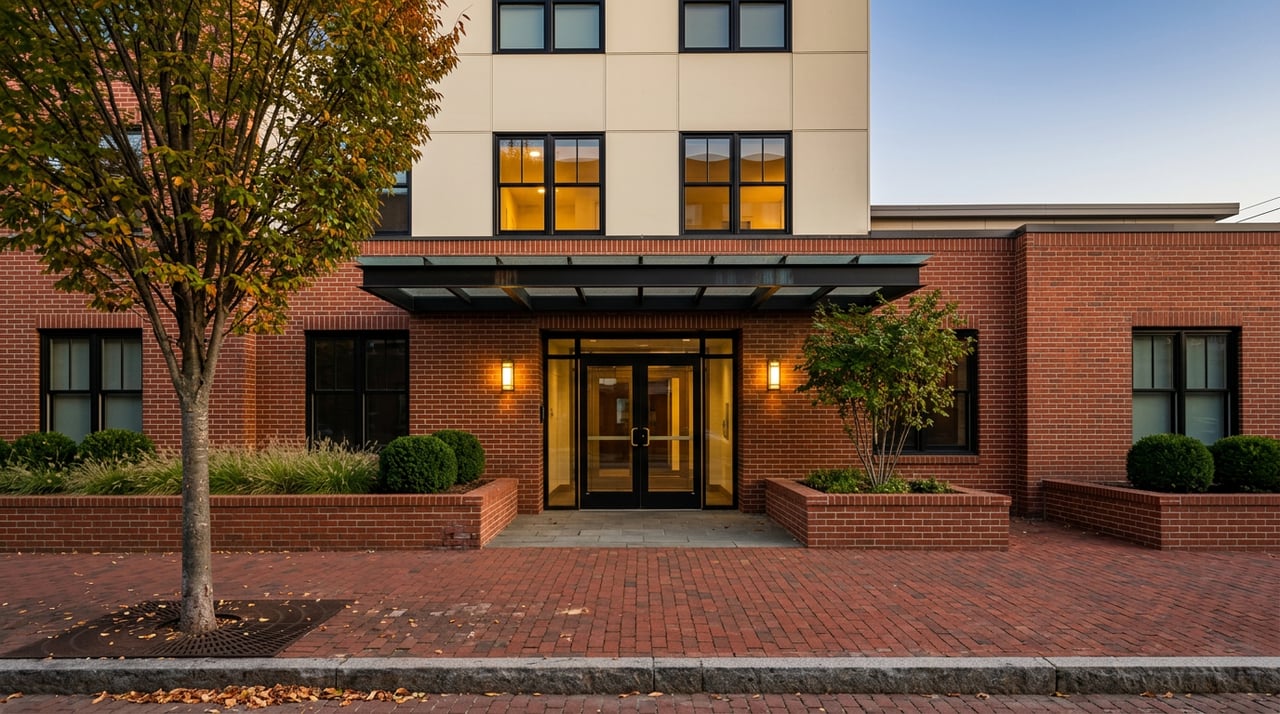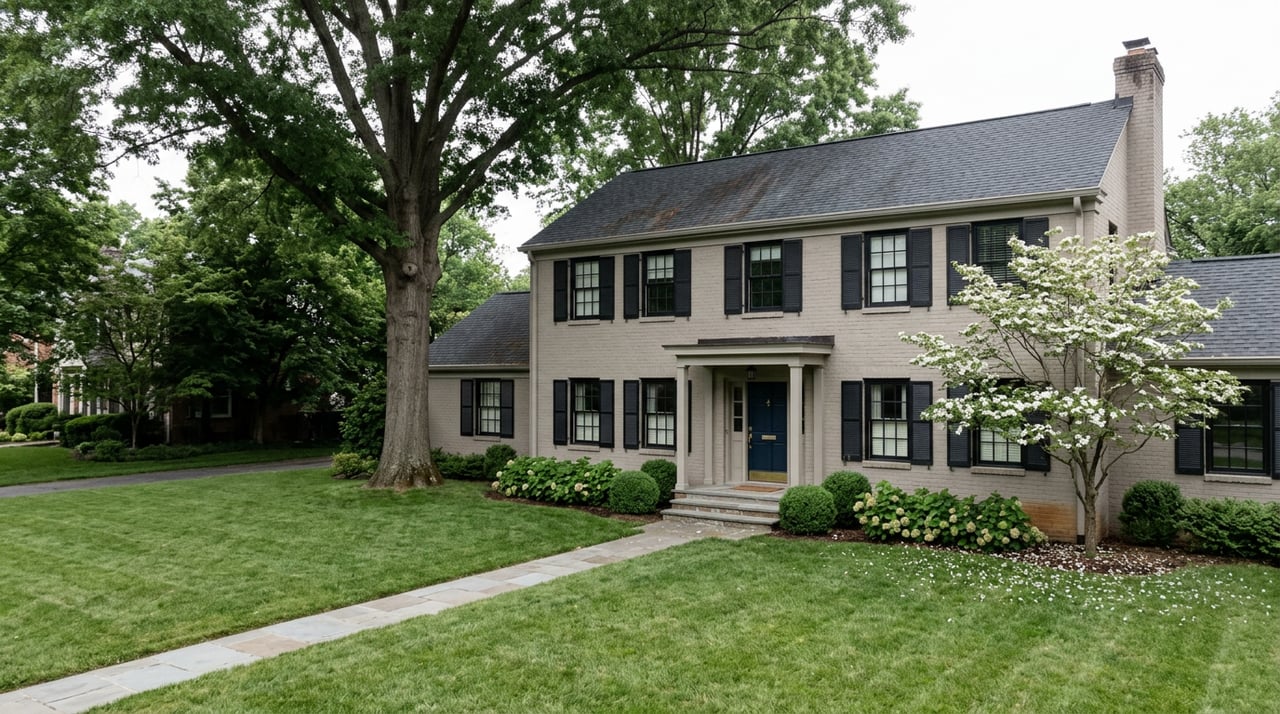
Two houses, both listed as "Falls Church, VA," priced within a few thousand dollars of each other, less than a mile apart. One sits inside a government that has run its own schools, its own police department, and its own budget since 1948. The other sits in Fairfax County, borrowing a name it never had a boundary claim to. The listing sheet does not say which is which. Your tax bill, your school assignment, and your trash pickup schedule all depend on it.
That is the friction almost every Falls Church buyer runs into eventually, usually after they have already fallen for a house.
Same Envelope, Two Governments
The City of Falls Church is genuinely small. It became a township inside Fairfax County in 1875 and voted to break away as its own independent city in 1948, largely so residents could run a school system of their own instead of being one piece of a much larger county district. What they built stayed compact: just over two square miles, with its own government, its own tax rate, and its own school district, Falls Church City Public Schools.
The U.S. Postal Service never respected that boundary. It still assigns "Falls Church" as the mailing city to a wide swath of unincorporated Fairfax County that was never inside the line, including Merrifield, Seven Corners, Bailey's Crossroads, and Pimmit Hills. None of those neighborhoods pay city taxes, use city services, or attend city schools. All of them show up on a listing exactly the way a home three blocks from City Hall does.
The Compact City Is Repricing Almost Twice As Fast
Here is the part that actually matters for anyone comparing two "Falls Church" homes on price alone. The City's own real estate assessment, effective January 1, 2026, shows total taxable value climbing 6.9%, an increase of $445.4 million over the prior year. Break that down further and residential values specifically rose 7.2%, with single-family homes up 8.1% and townhomes up 7.0%. Fairfax County, by contrast, reported an average residential increase of just 3.99% countywide for 2026.
A two-square-mile footprint with a fixed housing supply and a school district people move specifically to access is appreciating at close to double the pace of the much larger county area that shares its name. That is not noise. It is what happens when scarce, small-boundary housing stock meets steady demand from buyers who want in specifically for what the City offers. A home priced identically to its county-side neighbor today is not necessarily on the same trajectory five years from now.
What the Gap Costs on a Tax Bill
The rate difference compounds the assessment gap rather than offsetting it. City Council held the real estate tax rate at $1.185 per $100 of assessed value when it voted in April 2026, keeping it unchanged from the prior year. Fairfax County's adopted base rate for the same tax year is $1.1225 per $100.
| City of Falls Church | Fairfax County (Falls Church-addressed areas) | |
|---|---|---|
| 2026 real estate tax rate | $1.185 per $100 assessed | $1.1225 per $100 assessed |
| 2026 residential assessment growth | up 7.2% (single-family up 8.1%) | up 3.99% average |
| On a $1,000,000 assessed home | $11,850 per year | $11,225 per year |
The rate gap alone runs about $625 a year on a million-dollar home. Layer in the faster-growing assessment base on the City side, and the actual dollar gap between two similarly priced homes widens every reassessment cycle, not just once.
The City Is Debating Its Own Success
City Council members are watching this play out in real time. In April 2026, when a majority voted to hold the real estate rate steady rather than advertise an increase, Mayor Letty Hardi pushed back on even discussing higher rates, calling it "unconscionable and irresponsible" given that the city's income was projected to rise 7% in the coming year with rates left unchanged. That is a City government openly acknowledging that its tax base is growing fast enough to fund services without raising the rate at all. It is also a signal, straight from the people who set the number, that the City's valuations are not cooling off.
The Boundary Doesn't Follow the Zip Code
The instinct to use a zip code as a shortcut fails here too. A few properties technically sitting in zip codes 22042, 22044, and 22205 are still inside City limits, while the primary City zip, 22046, contains plenty of addresses that are not. Before treating a listing's location as settled, it helps to check a few things directly:
- Addresses along Leesburg Pike, Route 7, Arlington Boulevard, Route 50, or Lee Highway are usually not inside the City, even with a Falls Church mailing address.
- Most residential addresses inside City limits carry three-digit house numbers. Numbers 1400 and above are typically outside the City.
- The City of Falls Church maintains a free online address lookup tool built specifically to answer this question for any parcel.
None of this is a formality. It is the difference between one taxing authority and another, one school system and another, one utility billing structure and another.
Schools Follow the Boundary, Not the Address
Inside City limits, students attend Falls Church City Public Schools, a small, single-pyramid district that includes Meridian High School, renamed from George Mason High School in 2021, along with Mary Ellen Henderson Middle School and the district's elementary schools. Step outside the City line, even on a block that still says "Falls Church" on the mailbox, and enrollment shifts to Fairfax County Public Schools instead, specifically the pyramids in the county's Region 2, which covers the Falls Church, Justice, and McLean areas. Boundaries in both districts can and do shift from year to year, so a school assignment that holds true today is worth reconfirming with each district's own lookup tool rather than assumed from a real estate listing.
This is a jurisdictional fact, not a judgment about either system. The point for a buyer is narrower and more practical: the same mailing address does not guarantee the same school assignment, and that assignment is decided by a parcel boundary, not a zip code.
What This Means If You're Comparing Two "Falls Church" Homes
If you're pricing a move into this part of Northern Virginia, the sale price on two listings can look almost identical while the underlying cost structure is not. One home carries a smaller, faster-appreciating tax base tied to a single school district and city-run services. The other carries a larger county's rate, a different school pyramid, and county-run utilities and trash service. Neither is automatically the better financial choice. But comparing them as if the name on the envelope settles the question is how buyers end up surprised at closing, or a year later when the first full assessment notice arrives.
A Few Questions Worth Asking Before You Write an Offer
Does the zip code tell me whether a home is inside the City of Falls Church? Not reliably. The City's own address finder is the more accurate check, since a handful of properties in zip codes 22042, 22044, and 22205 sit inside City limits despite the zip code overlap with county areas.
Are property taxes actually higher inside the City? The rate is higher, and the assessment base is growing faster. What that higher cost buys is a smaller, locally run school district and city-controlled services, which is a trade-off worth weighing rather than a simple downside.
If I buy just outside the City line, will my child still attend a Falls Church school? Not automatically. Homes outside City limits, even with a Falls Church mailing address, typically feed into Fairfax County Public Schools' Region 2 pyramids instead. Boundaries can shift year to year, so it's worth confirming directly with the district's boundary lookup before assuming an assignment.
Sorting out which government actually holds the deed to your future tax bill takes a few extra minutes before an offer goes in. It is a far better use of that time than finding out at settlement.
If you're comparing homes across the City of Falls Church and its Fairfax County-addressed neighbors and want someone to walk the actual boundary line with you, property by property, Ruth Garvey and the team at RGA Realty Group can help you sort out what a specific address really means before you write an offer. Get a Free Home Valuation to see where your next move actually stands.