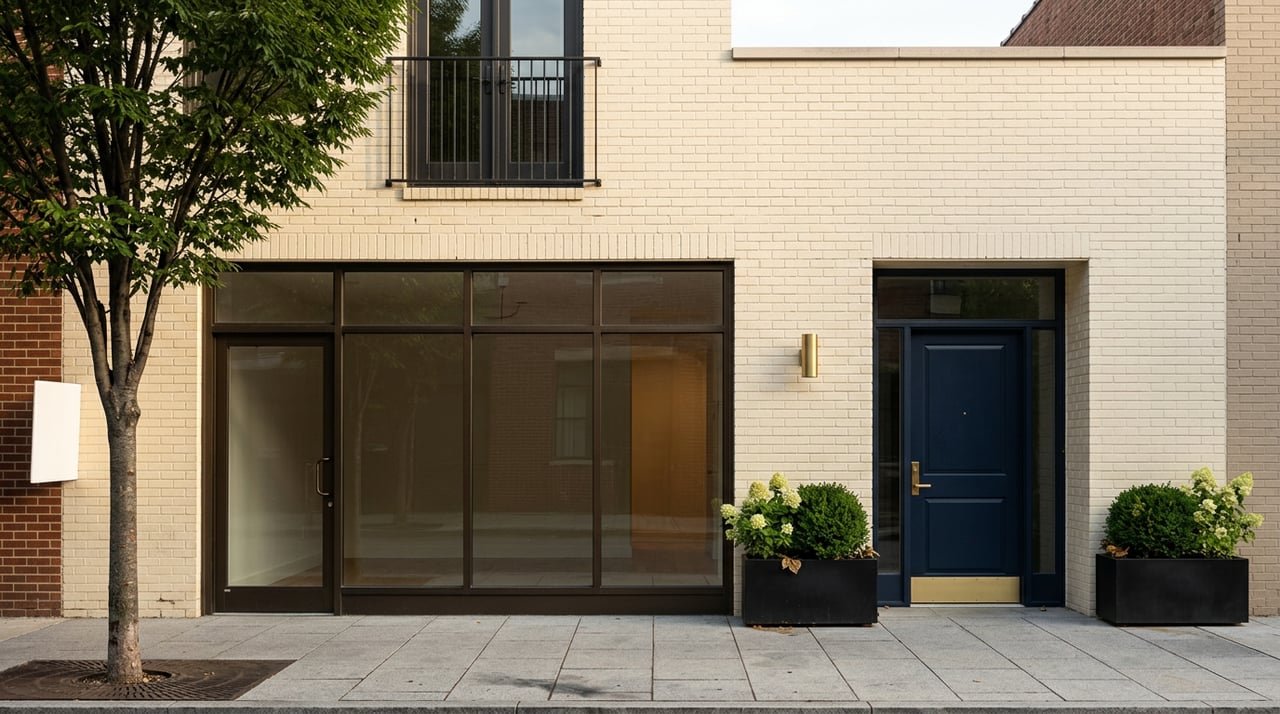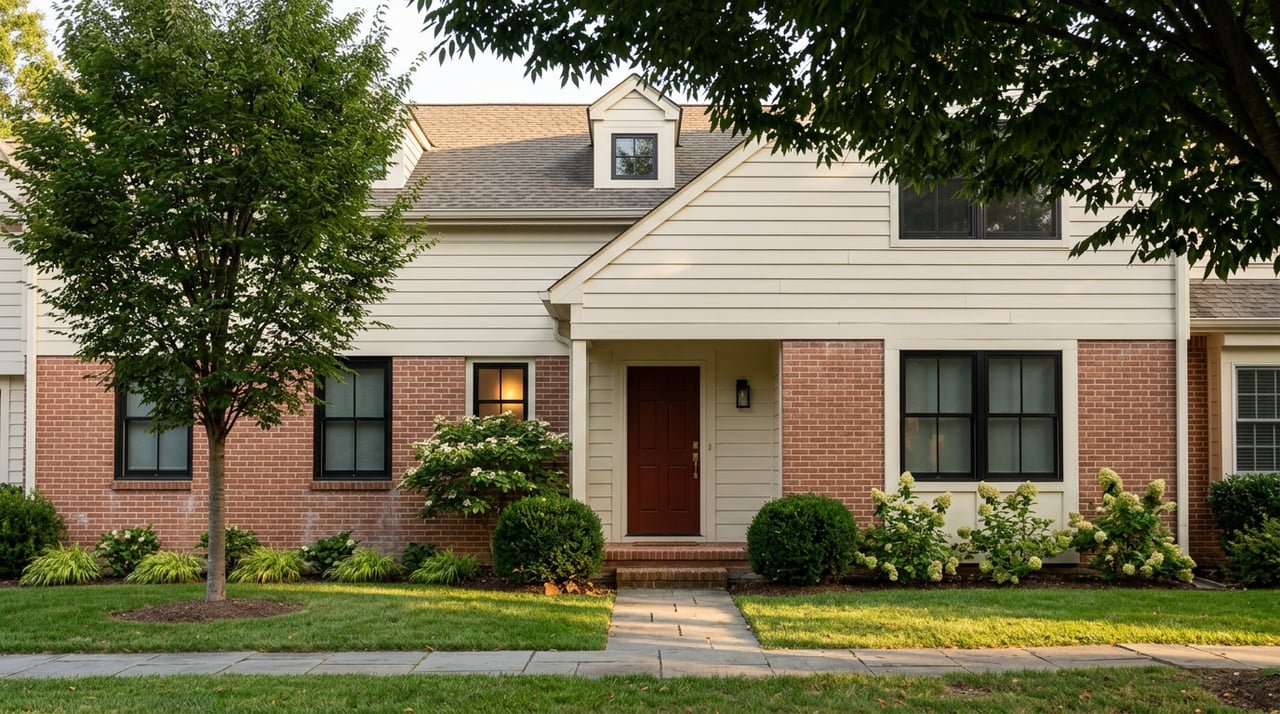
What if two Reston homes listed at the exact same price could cost their new owners a different amount every single month, before either one has made a mortgage payment?
That is not a hypothetical. It is how Reston's housing stock actually works, and it is the piece of the market that a scroll through listing photos will never show you. Nearly every property in Reston sits under two layers of mandatory dues rather than one, and because the base layer is priced as a flat dollar figure instead of a percentage of home value, it lands hardest on exactly the buyers who can least absorb it: people shopping the entry-level condos and townhomes that make Reston attractive in the first place.
The number every listing shares
Start with the layer every Reston property owner pays no matter what. The Reston Association's board adopted a $24 million budget for 2026 in mid-November 2025, setting the annual assessment at $890, a roughly 5 percent increase over the prior year's $848. Owners who qualify for the Fairfax County Tax Relief Program, based on age, disability, or income, pay $445 instead. There is also a one-time $374 transfer fee due at settlement, separate from the annual assessment.
That fee funds real things: 15 pools, four lakes, more than 1,300 acres of open space, trail maintenance, and covenant enforcement across the entire Reston footprint. It is not padding. It is also not the whole bill.
Why a flat fee hits harder the lower you shop
Here is the part that changes how you should read a Reston listing. The $890 assessment does not scale with what you paid for your home. A buyer closing on an entry-level condo pays the identical dollar amount as a buyer closing on a home three or four times the price. Run the arithmetic against Reston's actual price spread and the asymmetry is obvious: on a home in the low $300,000s, that $890 represents close to 0.3 percent of the purchase price. On a home near $1.1 million, the same $890 is a rounding error, closer to 0.08 percent.
A flat assessment is not unusual for a master association, but it does mean the fee behaves like a regressive cost. It takes a proportionally bigger bite out of the buyer with the smaller budget, which in Reston is disproportionately the first-time purchaser or the buyer stretching to afford a starter condo near Lake Anne or South Lakes. Lenders also count that dues figure into the debt-to-income math they use to size your mortgage. An extra $75 a month in fixed association cost is $75 a month of borrowing capacity that isn't going toward the loan itself, and that math bites hardest on the tightest budgets.
The second layer nobody prices in from the listing photo
Reston is organized into five village centers, Lake Anne, Hunter's Woods, Tall Oaks, South Lakes, and North Point, and inside those districts sit more than 160 separate cluster and condo associations, each with its own board, its own budget, and its own dues. Almost no Reston property carries only the base RA assessment. Most carry that fee plus a second, separate bill from whichever cluster or condo association governs their specific street or building.
Those second-layer fees are where the real variation lives. Soapstone Cluster, for example, charges its own annual assessment of $1,880, billed in quarterly installments of $470, on top of the base RA fee. That budget covers grounds maintenance, snow removal on private streets, trash and recycling, capital reserves, insurance, and the common property the cluster itself owns, including internal roads, parking areas, and shared green space. Some of Reston's older condo buildings carry monthly fees that exceed $600, a figure that reflects building-scale costs like roof and elevator reserves, master insurance, and exterior upkeep that a single-family cluster never has to budget for.
Put two properties side by side at the identical list price and the math can diverge by well over a thousand dollars a year once you add the second layer, before anyone has touched a mortgage calculator.
| Fee layer | 2026 figure | What it covers |
|---|---|---|
| Reston Association base assessment | $890/year ($445 with tax relief) | Pools, lakes, trails, open space, covenant enforcement |
| RA transfer fee | $374, one-time at settlement | Administrative processing |
| Soapstone Cluster assessment (example) | $1,880/year, $470/quarter | Private roads, snow removal, grounds, reserves, insurance |
| Older condo building fees (some) | $600+/month | Building systems, master insurance, exterior reserves |
Governance is layered too, and it can change what you can install
The fee structure is not the only place the two-layer system shows up. Reston Association adopted its first formal design standards for electric vehicle charging stations in 2021, after a ten-month review process. Those standards let existing stations stay grandfathered in, but new installations still go through both the cluster and the Design Review Board, and requirements can differ by property type.
That distinction matters more in Reston than in most Northern Virginia communities because so much of the housing stock, particularly the townhome clusters built without individual driveways or garages, relies on shared parking. Harpers Square, a 50-unit townhouse cluster with no driveways or garages of its own, became the first Reston community to install shared EV chargers through Fairfax County's Charge Up Fairfax program, marking the milestone with a ribbon cutting on two new chargers on December 18, 2024. The county program covers a feasibility assessment and offers up to $12,000 toward installation costs, and by late 2025 it had grown to 20 participating communities, with 10 of them inside Reston's Hunter Mill District.
If you drive an EV or plan to, this is worth asking about before you write an offer, not after closing. A cluster's stance on shared charging infrastructure, whether it already has a plan through a program like Charge Up Fairfax or hasn't addressed it at all, is a governance question that sits entirely at the cluster level, separate from whatever the base RA rules say.
What this means while you're actually shopping
Reston's market has not gone soft enough to make this optional. As of June 2026, the average home value across Reston stood at $639,321, down 1.7 percent from a year earlier, a market cooling at the edges but still active enough that well-priced listings draw real competition. In that kind of market, the temptation is to compare list prices and move fast. The fee structure argues for slowing down at exactly one point: before you write the offer, not after.
Ask for the cluster or condo resale disclosure packet alongside the RA packet. Virginia's Property Owners' Association Act requires sellers to provide it, and it will show you the current dues, the reserve study, and whether the association has discussed any special assessments. Two homes at the same price are not the same purchase if one carries only the base RA fee and the other carries a cluster assessment on top of it. That difference belongs in your monthly budget math from the start, not as a surprise in your first year of ownership.
A few questions worth asking before you tour
Does every home in Reston pay the Reston Association assessment? Yes, membership and the assessment apply broadly across Reston properties. What varies is whether a specific home also owes a second fee to a cluster or condo association layered on top of that base amount.
Can cluster or condo fees increase after I buy? Yes. Cluster and condo boards set their own budgets and can raise assessments to cover rising costs, capital projects, or reserve funding, separate from any changes the Reston Association makes to its own fee.
Does a more expensive home mean a higher Reston Association fee? No. The base RA assessment is a flat dollar amount that applies regardless of purchase price. Any variation you see between two Reston homes comes from the second, property-specific layer, not from the master association fee itself.
Understanding which layer you're paying, and what each layer actually buys, is the difference between a monthly budget that holds and one that gets a surprise a few months after closing. If you're comparing Reston neighborhoods and want the layered costs worked out before you tour, RGA Realty can walk you through the resale packet, the cluster history, and what a specific property actually costs to carry, not just what it costs to buy. Reach out for a free home valuation and a clear-eyed read on what a Reston purchase really adds up to.