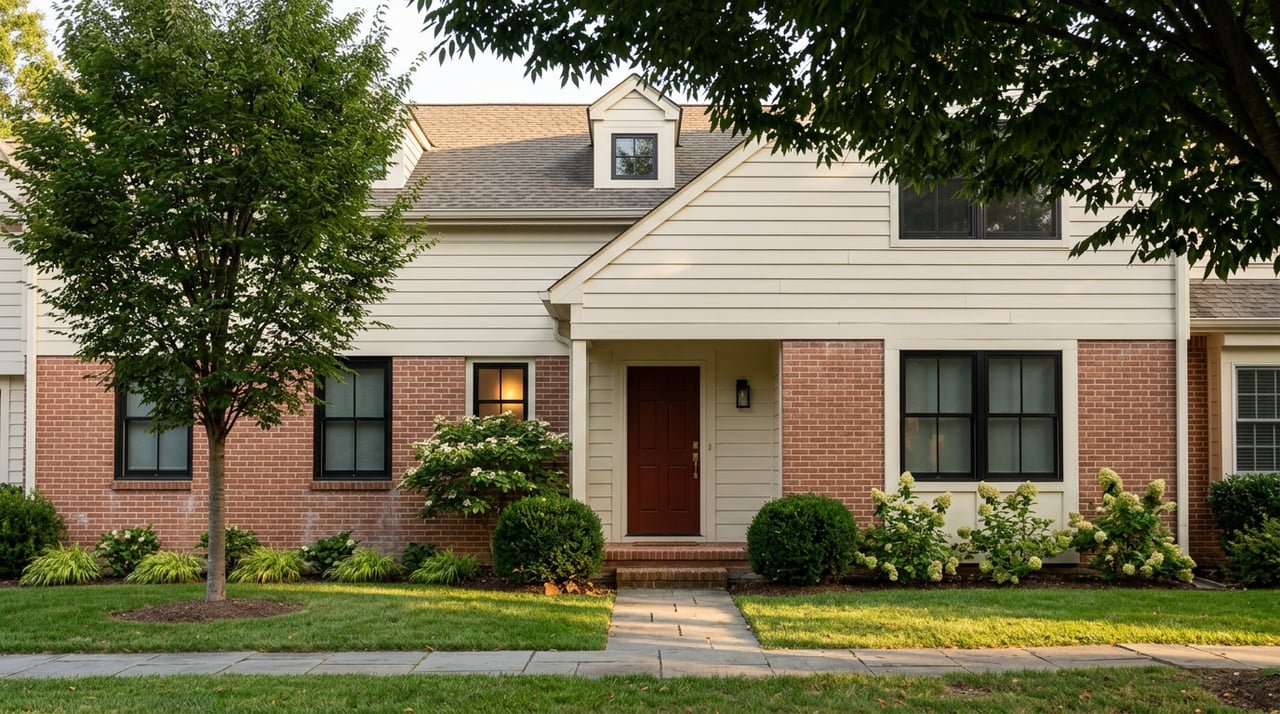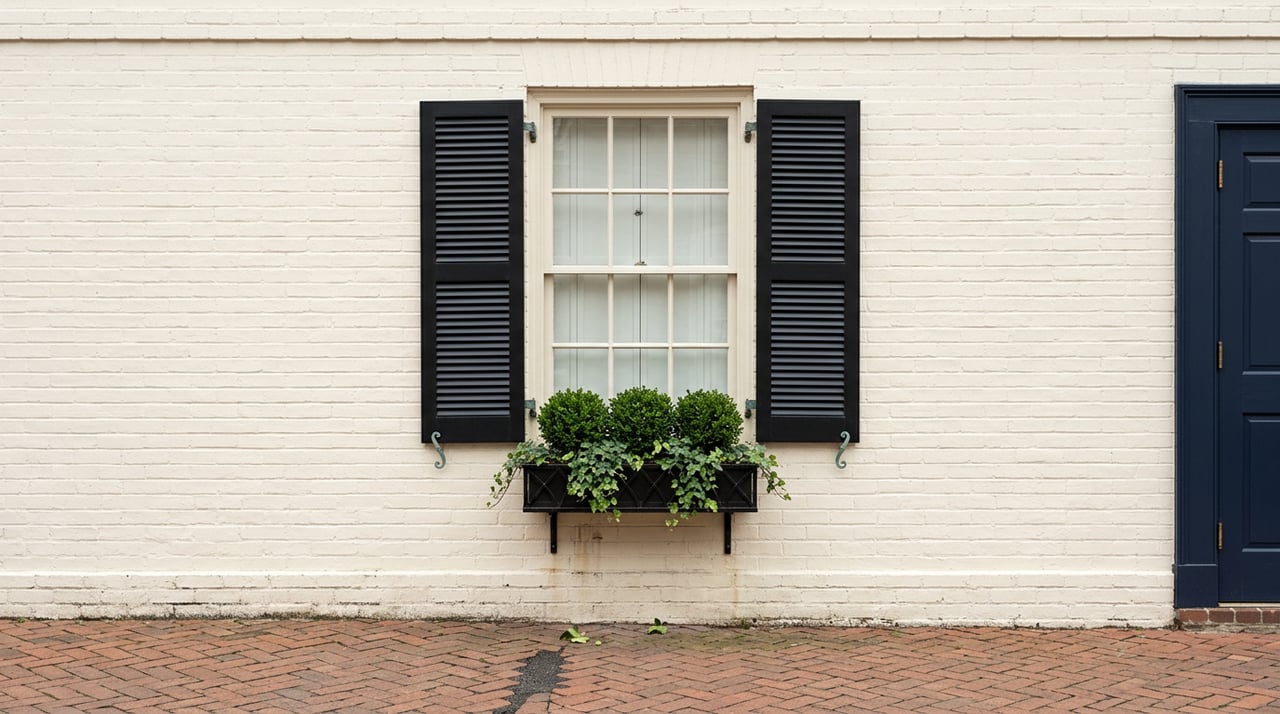
One speaker put it plainly at the City's Aug. 19 preservation meeting at the Nannie J. Lee Community Center: "That is what Alexandria is known for." She was talking about protecting the historic character, scale, and materials that make Old Town look the way it does. Nobody in the room argued with her.
But here is what the numbers say this year. Zillow's index for Old Town Alexandria puts the typical home value there at $1,091,123, down 2.1% over the past year as of the most recent June 2026 update. Meanwhile the broader Alexandria market has been running the other direction. Redfin reported a median sale price of $758,000 for the three months ending June 2026, up 9.4% compared to the same period the year before. The Northern Virginia Association of Realtors' February 2026 snapshot showed the city's average home price at $824,629, up 5.2% year over year, with sales climbing too.
So the neighborhood everyone agrees is the crown jewel of the local market is softening while the rest of the city heats up. That is not a coincidence you can explain with mortgage rates or inventory alone. Something specific to Old Town is putting a drag on its own appreciation, and the most likely candidate is sitting in a city docket most buyers never open before they write an offer.
The Rule That Turns a Window Into a Paperwork Project
Old Town's most protected streets fall inside one of two locally regulated historic districts: the Old and Historic Alexandria District (OHAD) and the Parker-Gray District. A separate citywide list of 100-Year-Old Buildings adds more properties outside those boundaries. All of them answer to the Board of Architectural Review, a seven-member board of Alexandria residents appointed by City Council, and the review is far more granular than most buyers expect walking into their first showing.
Look at what actually shows up on a real BAR docket. At the February 18, 2026 hearing, homeowners sought approval for a window replacement at 2 Franklin Street, another window replacement at 119 Queen Street, a roof replacement at 906 Queen Street, siding replacement at 513 North Columbus Street, and a door replacement at 202 South Pitt Street. None of these are additions or new construction. They are the kind of maintenance almost every homeowner eventually does, and in this district every one of them needed a hearing or staff sign-off first.
The rules get specific fast. On a pre-1932 home, front-facing historic windows have to be repaired and retained rather than replaced outright, and any replacement must meet the city's Replacement Window Performance Specifications. Side or rear windows on those same homes cannot use vinyl or sandwich muntins, and they have to match the original operation and light configuration. Post-1931 homes get a break only if the window sits more than 15 feet back from the front property line. A building permit is required for every window swap in the district regardless. Shutters follow a similar pattern: pre-1932 front-facing shutters need review, but side, rear, or post-1931 shutters generally do not. Painting brick that has never been painted is discouraged and typically requires review, because the board is wary of coatings that trap moisture in historic masonry.
None of this means Old Town is impossible to renovate. City staff reported that 408 of 556 BAR cases last year were approved administratively, meaning no public hearing required. That is nearly three out of four cases moving through relatively fast. The friction lives in the other quarter, and that quarter tends to include exactly the visible, street-facing projects a seller does right before putting a historic home on the market.
What Approval Actually Costs You in Time
| Project type | Review pathway | Typical timeline |
|---|---|---|
| Ordinary maintenance, repair matching existing design | Administrative (staff) approval | Days to a few weeks |
| Window, shutter, door, roof, or siding replacement matching guidelines | Staff review, sometimes a hearing | A few weeks |
| New construction, additions, dormers, visible demolition over 25 square feet | Full BAR public hearing | 4 to 8 weeks for the hearing itself |
| Common exterior project overall, start to permit | Combined staff and hearing steps | 2 to 4 months |
That last row matters more than it looks. A seller who decides in September that fresh windows or a repainted door will help a listing has to build two to four months into the calendar before a contractor can even legally start, because the Certificate of Appropriateness has to be in hand before the building permit is issued. The renovation cannot run in parallel with the approval. It has to wait for it.
There's a scheduling wrinkle that makes this worse right now. The Board of Architectural Review meets on the first and third Wednesday of the month, except August. It does not meet at all this month. Anyone hoping to get a public hearing on a porch, deck, or window project is looking at September at the earliest, and that assumes the application is complete and ready to go.
The Rules Are About to Get Tighter for the Projects Sellers Do Most
The timing compounds. City planners are in the middle of rewriting the Design Guidelines that the BAR uses to judge every Certificate of Appropriateness application, and the draft changes tighten review on some of the most common pre-sale improvements. Under the proposed update, new or relocated utility meters in Parker-Gray would need staff approval to match the standard Old Town already uses. Exemptions currently covering some non-front elevations would end. Porches, decks, and planter walls would face revised standards, and new or replacement porches visible from a public street could require a full BAR hearing instead of staff sign-off. Deck construction in Parker-Gray could shift to board review as well.
Not everything is getting harder. Small exterior accessories, like bank deposit boxes, would move to administrative approval under the draft, which would save board time on genuinely minor items.
The public comment period on the current 11 chapters of the draft runs through September 2, 2026. City staff will fold that feedback into final drafts, and the revised guidelines are expected to go before the BAR for adoption hearings in October. If you are weighing a renovation or a listing timeline for later this year, that October date is worth watching, because whatever passes will govern the review standard for every application filed after it.
The Paperwork Nobody Reads Until Closing
Virginia's Residential Property Disclosure Act requires a specific line most buyers skim past. The standard disclosure form states that the owner makes no representations about whether a historic district ordinance affects the property, and it puts the burden on the purchaser to review the local ordinance, the official historic district map, and the city's own materials before closing. In plain terms, the seller is not required to walk you through what BAR review means for your future renovation plans. That homework belongs to the buyer, and it belongs before ratification, not after.
This is why a title search and a home inspection are not enough due diligence for a historic Old Town purchase. A buyer planning to replace a porch roof or add a rear addition should confirm, before writing an offer, whether the property sits inside OHAD or Parker-Gray boundaries or carries a 100-Year-Old Building designation, and should have a rough sense of which review pathway that specific project would trigger.
A few questions worth asking before you make an offer or list a historic property:
- Is this property inside the Old and Historic Alexandria District, the Parker-Gray District, or on the city's 100-Year-Old Buildings list, or does it sit outside all three?
- If you plan to touch anything visible from the street, front-facing windows, shutters, a porch, siding, or the roof, does the project look like a same-design replacement, or does it change materials, scale, or profile?
- Given the board's August recess and the pending guideline changes, does your timeline realistically allow two to four months between application and permit?
A Short FAQ for Old Town Buyers and Sellers
Does every home in Old Town fall under BAR review? No. Alexandria has seven National Register Historic Districts, but only the Old and Historic Alexandria District and the Parker-Gray District are locally regulated through the Board of Architectural Review, along with individually designated 100-Year-Old Buildings. A home in a National Register district that isn't one of those two can typically renovate under standard city permitting rules.
What happens if exterior work goes forward without approval? The city can issue a stop-work order, levy fines, and require the property to be restored to its previously approved condition. That is a costly way to learn the rule applies to your project.
How far in advance should a seller plan a pre-listing renovation? Budget two to four months for a typical exterior project that needs BAR sign-off, and remember the board does not meet in August. If the pending Design Guidelines pass in October as expected, some projects that currently qualify for faster staff approval may move into the longer hearing track.
Old Town's charm is not going anywhere, and neither is the demand for it. But charm and speed are pulling in different directions right now, and that tension is showing up in the price data before most buyers ever notice it in the docket. If you are weighing a purchase, a sale, or a renovation inside either historic district, get the district status and the likely review pathway settled before you commit to a timeline.
If you want a read on what a specific Old Town address is actually worth, or what a renovation project would take to get approved before you list, Ruth Garvey and the RGA Realty Group team can help you get a free home valuation and a clear-eyed plan for the calendar ahead.