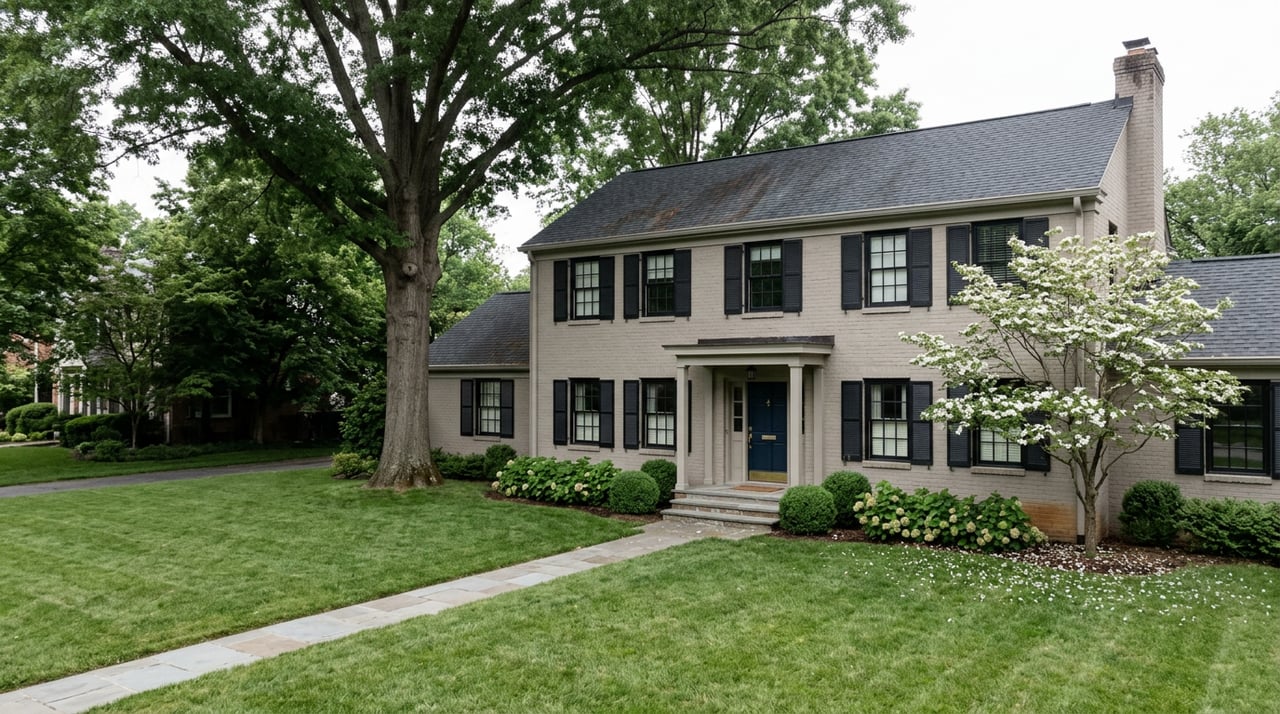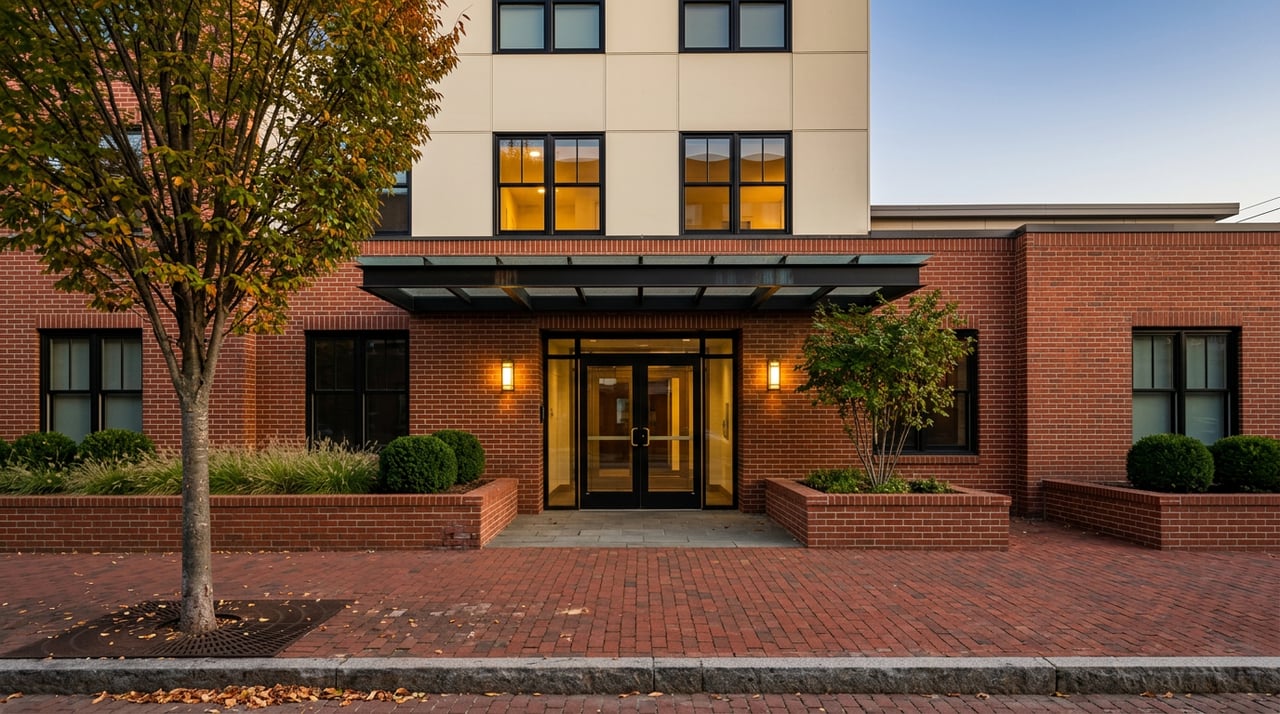
Two DC buyers closed within months of each other this year on properties roughly $75,000 apart in price. One walked away owing zero recordation tax and picked up a credit for the seller's transfer tax on top of it. The other paid full freight on both taxes, the standard way, because the better discount doesn't reach as far as what he bought. The gap wasn't income, and it wasn't credit history. It was property type, sorted by a price ceiling the District set without spelling out who it was really built for.
Every DC deed carries two separate taxes at settlement: a recordation tax, which the buyer typically pays when the deed is recorded, and a transfer tax, which the seller typically pays when ownership changes hands. Both run 1.1 percent of the price for transactions under $400,000 and 1.45 percent at or above that line. On a $650,000 condo, that's $9,425 in recordation tax alone before either side asks for a break.
The District offers two distinct ways to shrink that number, and mixing them up is the most common mistake buyers and even their lenders make.
The Discount Everyone Mentions
The Reduced Recordation Tax Rate, filed on Form ROD 11, drops a qualifying first-time DC homebuyer's recordation tax to a flat 0.725 percent, regardless of price tier, as long as the purchase price stays at or under the FY2026 cap of $777,000. The seller's transfer tax stays exactly where it was. On that same $650,000 property, the buyer's share falls from $9,425 to $4,712.50. It's a real save, and one loan officers and title companies bring up routinely because the income limits are generous enough that most first-time buyers clear them.
The One That Almost Never Comes Up
The Lower Income Homeownership Exemption, better known as the DC Tax Abatement Program, does considerably more and isn't limited to first-timers. It eliminates the buyer's recordation tax entirely, credits the seller's transfer tax back to the buyer at settlement, and exempts the property from real property tax for five years starting the October after the application is approved. Any owner-occupant who meets the income test qualifies, whether this is their first DC home or their third.
The catch is the price cap: $576,000 for FY2026, effective October 1, 2025, with income limits adjusted annually for inflation. That's $201,000 lower than the reduced recordation rate's ceiling, and it's the number quietly deciding who gets access to the stronger benefit.
| Standard rates | Reduced Recordation Rate (ROD 11) | Tax Abatement Program | |
|---|---|---|---|
| First-time buyer required | No | Yes | No |
| FY2026 price cap | None | $777,000 | $576,000 |
| Buyer's recordation tax | 1.1% / 1.45% | Flat 0.725% | Waived entirely |
| Seller's transfer tax | Paid by seller, unaffected | Paid by seller, unaffected | Credited to the buyer |
| Property tax | Standard bill | Standard bill | Exempt for 5 years after closing |
Why the Ceiling Lands Where It Does
Line those caps up against what's actually selling in the District and the pattern isn't subtle. In July 2026 market data, the median single-family home in DC sold for roughly $730,000, while the median condo sold for around $385,000. A typical rowhouse or detached home clears the abatement's $576,000 cap before a buyer even writes an offer. A typical condo doesn't come close to touching it.
Condo values in the District have also felt more pressure than detached homes lately. Researchers at the Brookings Institution have tied part of that softening to a weaker rental market competing with owner-occupied condos for the same pool of buyers, along with rising monthly fees and insurance costs for condo owners. The practical effect: condo prices sit close to the abatement's ceiling while the ceiling itself stays fixed, and single-family prices sit well above it.
None of that is a coincidence a buyer needs to solve. It's simply the shape of a benefit written around one price point that happens to match one type of housing stock. If you're comparing a condo in Petworth to a rowhouse in Bloomingdale at similar price points, only one of those purchases is likely to clear the smaller cap, and it has nothing to do with either buyer's qualifications.
What the Difference Is Worth
John Downs, a senior vice president at Vellum Mortgage who works these programs regularly, has walked clients through the math on a real $475,000 purchase. Under the reduced recordation rate alone, the buyer would have owed $3,443 in recordation tax. Under the tax abatement, that entire amount was waived, and the seller's $6,887 transfer tax was credited back to the buyer at the table. That's more than $10,000 that never left the buyer's pocket, before the five-year property tax exemption even starts running.
The Income Test That Trips People Up
The abatement's income limit doesn't work the way most people assume a mortgage-adjacent number should. Mortgage qualification looks at the borrower's income, meaning whoever is signing the loan. The abatement looks only at the income of everyone who will actually live in the home, whether or not they're on that loan.
Downs has closed this exact structure three times in 2026 for graduate students at Georgetown, George Washington, and American University. In one case, a medical student's income alone couldn't carry a $385,000 mortgage, so his father co-signed and the lender used the father's income to qualify the loan. Because the father wasn't going to live there, only the son's income counted against the abatement's limit. The son bought a condo in Mt. Vernon Square, paid no recordation tax, received the seller's transfer tax as a credit, and won't owe property tax for five years.
The reverse trap catches people too. Downs has also described a single mother who bought a three-bedroom condo in Brookland with her mother, who lives with her. Her mother's Social Security income counted toward the household total even though she wasn't on the mortgage at all. Every occupant's income counts. Whether someone is borrowing or not doesn't matter.
Stacking It With Down Payment Help
The abatement and the reduced recordation rate can each be paired with separate down payment assistance, most commonly DC Open Doors through the District's housing finance agency, which offers a deferred, zero-interest loan covering the required minimum down payment. DC Open Doors runs its own income test based on the borrower's qualifying income rather than the whole household's, plus its own mortgage size limit. The Home Purchase Assistance Program, aimed at lower and moderate-income households, layers in as well but comes with its own paperwork and its own timeline. None of these programs share an application, and none of their income tests are calculated the same way. That's exactly why a buyer who assumes one approval covers everything gets surprised at the settlement table.
Before You Write an Offer
A few questions are worth raising with your lender and agent before a contract goes in on any DC property, especially one priced near the middle of the market:
- Does the purchase price sit at or under $576,000, and if it's close, does the seller have room to adjust?
- Whose income actually needs to be tested: everyone who will live there, or just the names on the loan?
- Is your lender familiar with DC Open Doors and the tax abatement application process? Not every lender is.
- If you're a first-time buyer priced between $576,000 and $777,000, have you confirmed the reduced recordation rate before assuming you're locked out of every benefit?
A Short FAQ
Do I have to be a first-time buyer for the Tax Abatement Program? No. Unlike the reduced recordation rate, the abatement is open to any owner-occupant who meets the income and price limits, first-time buyer or not.
Can the tax abatement and reduced recordation rate be combined? The reduced rate becomes moot once the abatement waives the recordation tax entirely, so a buyer who qualifies for the abatement doesn't need the smaller discount stacked on top. What can stack are the down payment assistance programs, which run separately from either tax benefit.
What happens if my income changes after I qualify? The abatement is evaluated at the time of application, generally within 30 days of closing. Confirm any specifics around timing and review with the DC Office of Tax and Revenue directly, since documentation requirements can shift year to year.
If you're weighing a condo against a rowhouse in the District, or trying to work out what a specific address would actually cost at the settlement table, the team at RGA Realty Group can run the numbers with you before you write an offer. Thinking about what a move into DC would mean for a home you already own? Get a Free Home Valuation and let's talk through both sides of the math.